
بسم الله الرحمن الرحيم
05 Rajab 1447/26 December 2025
All praise is due to Allah ﷻ, the Cherisher, Sustainer, Nourisher and Provider of the entire creation. May peace, blessings and salutations be upon our Beloved Prophet Muhammed ﷺ.
We find ourselves heading towards the end of 2025 as per the Gregorian calendar and the well known “New Year’s Eve” is fast approaching.
Historical Background
“New Year’s Eve” also known as “Old Year’s Day” or “Saint Sylvester’s Day” in many countries is the evening or the entire day of the last day of the year (31 December 2025).
This evening usually commemorates the feast of Pope St. Sylvester I, the leader of the Roman Catholic Church who was buried on December 31st. The concept of News Years resolution brings about a moment of spiritual refresh for many Christians to rededicate their lives to their faith.
Common Practices during this period
We are fully aware that on this particular evening, wrongdoing becomes widespread. Across all corners of the world, festivals and gatherings take place in which various forms of immorality occur, most notably intoxication and adultery. The limits set by the Almighty ﷻ are openly violated. These celebrations do not originate from Islam, and participation in them constitutes imitating and accepting the practices of people outside the Islamic tradition.
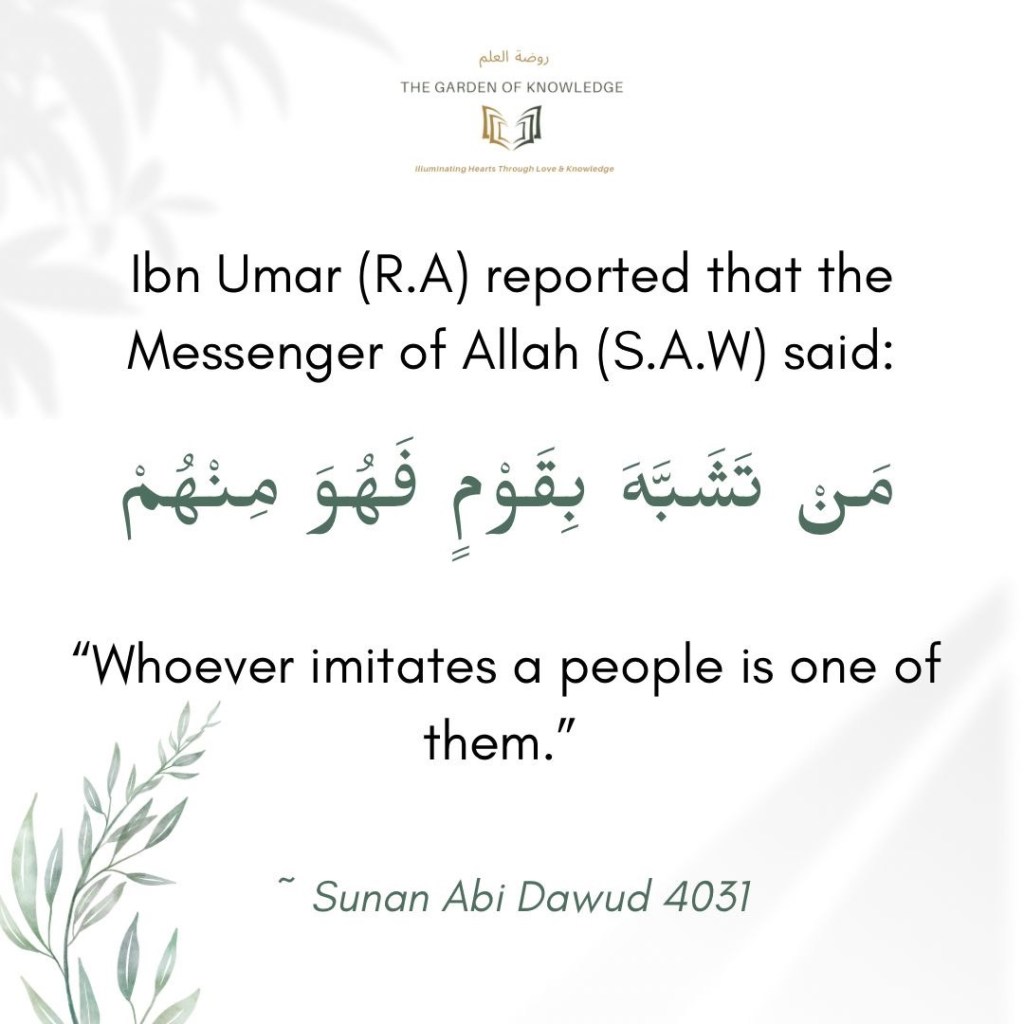
Ibn Umar (R.A) reported that the Messenger of Allah ﷺ said:
مَنْ تَشَبَّهَ بِقَوْمٍ فَهُوَ مِنْهُمْ
“Whoever imitates a people is one of them.” – Sunan Abi Dawud 4031
Another practice commonly observed in our communities is the gathering near midnight, where people spend hundreds or even thousands of rands or dollars on fireworks to mark the passing of one year and the beginning of another. While this may appear harmless, there are several concerns to consider. Firstly, it involves imitating the customs of people and nations outside of Islam. Secondly, it can be regarded as wasteful—especially when we reflect on the condition of our surrounding communities, where many are less fortunate and struggle to meet their basic needs. Large sums are spent on fireworks that last only a few moments and offer no real benefit or nourishment to ourselves or others. Thirdly, such practices may disturb neighbors and cause harm or distress to animals, who are also part of the creation of Allah.
Allah ﷻ informs us in the Quran:
وَلَا تُسْرِفُوٓا۟ ۚ إِنَّهُۥ لَا يُحِبُّ ٱلْمُسْرِفِين
“And do not waste. Surely Allah ﷻ does not like those who are wasteful” [6;141]
There are many other verses where Allah ﷻ advises us against being wasteful.
We ask Allah ﷻ to protect us and our families from all evil and wrongdoing during this period and save us from imitating a nation/people other than Islam.
So what do we do on nights like these?
Just like any other night we should fulfil our obligations in terms of our worship. We can spend time with family and engage in beneficial discourse, have family game nights and engage in activities which bring us closer firstly to Allah ﷻ and brings us closer to one another.
One can take out some time to reflect over the year that has passed and make Muhasiba (take account) of one’s actions over the past year and look for ways to improve not only as a Muslim but as a human being.
If one wishes to stay up a bit later during the night, one can take the opportunity to show gratitude to Allah ﷻ for all the favors, blessings and mercy shown to us by the Almighty ﷻ by performing extra nawaafil Salah and engaging in dhikr. One can even start 2 rakaat nafl Salah just before midnight so one begins the ‘new year’ in Salah.
The above practices are recommended to be performed on a daily basis or as frequent as possible and not just once or twice out of the year.
May Allah ﷻ accept our efforts from us and grant us understanding In Sha Allah!
 The Garden of Knowledge
Leave a comment