
بسم الله الرحمن الرحيم
02 Rabi ul Thaani 1447/25 September 2025
All praise is due to Allah, the Cherisher, Sustainer, Nourisher and Provider of the entire creation. May peace, blessings and salutations be upon our Beloved Prophet Muhammed ﷺ.
CHARACTERISTICS OF MAQASID AL SHARIAH
There are four main characteristics of Maqasid al Shariah, namely: (Asyraf Wajdi Dusuki et al., 2011)
- Maqasid al Shariah is the basis of legislation. Legislation has to serve the interest (جلب المصالح) of all humankind and to save them from harm (دفع المفاسد). This characteristic has been identified by scholars from inductive investigation (istiqra) of the Quran and Sunnah.
- Maqasid al Shariah are universal, designed to enhance mankind’s interests and requiring the adherence of human beings to them. The Quran is applicable to all of mankind all over the world. Allah ﷻ makes mention in surah 34, verse 28:
وَمَآ أَرْسَلْنَـٰكَ إِلَّا كَآفَّةً لِّلنَّاسِ
“We have not sent thee but as a universal (Messenger) to men”
- Maqasid al Shariah are inclusive (absolute). They encompass all acts of man whether they relate to Mua’amalah or Ibadah.
- Maqasid al Shariah are definitive. They have been derived from multiple texts and different forms/types of evidences and not from a single source.
CATEGORIES OF MAQASID AL SHARIAH
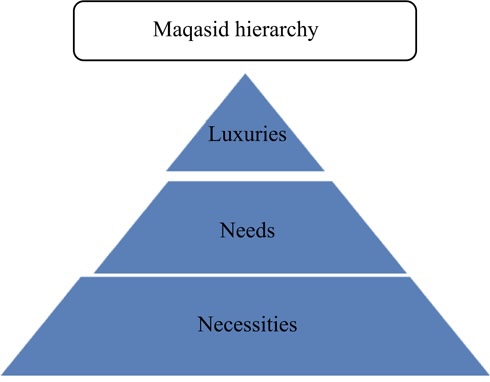
Maqasid al Shariah was divided into 3 levels/categories according to traditional classifications, namely: (Jasser Auda, 2010)
- Darurat (Necessities) – These are considered as the most essential matters for human life and with the absence of these essentials, humankind will face many difficulties and challenges. Darurat include the safeguarding and preservation of faith (deen), life (nafs/haya), intellect (aql), offspring (nasl) and wealth (maal). There is general agreement amongst scholars that the preservation of these essentials is the objective behind any revealed law.
- Hajiyat (complimentaries) – These complimentaries are less essential for human life however they can cause difficulties for an individual or a community if they are neglected. For example, trade and transportation.
- Tahsiniyyat (luxuries) – These provide ease and prosperity for human life and is mainly for beautifying purposes such as beautiful homes, stylish clothes and latest technological devices.
CONTEMPORARY CLASSIFICATION OF MAQASID AL SHARIAH
The traditional classification of Maqasid al Shariah as mentioned above was criticized by contemporary theorists for a number of reasons. Amongst them:
- Traditional Maqasid are concerned with individuals rather than families, societies and humans in general.
- Traditional Maqasid did not include freedom and justice which are universal and basic values.
- Traditional Maqasid was not derived from original scriptures and sources rather it was deduced from studying ‘Fiqhi’ literature.
To address the flaws in traditional Maqasid, modern scholarship established new classifications that took into account additional dimensions. Contemporary classifications divide Maqasid into three levels:
- General Maqasid: These are observed throughout the entire framework of Shariah such as Dururat, Hajiyat and newly proposed Maqasid, such as justice and facilitation.
- Specific Maqasid: These are observed throughout a specific and certain chapter of Shariah, such as preventing monopoly in financial transactions law and the welfare of children in family law.
- Partial Maqasid: These are the ‘intents’ behind specific rulings such as the intent of alleviating difficulty in allowing an ill fasting person to break his/her fast.
Contemporaries expanded the Maqasid to included groups and larger scopes of people such as communities, nations etc. in order to remedy the individuality drawback. They also included new universal Maqasid principles that were derived directly from original scriptures and sources.
May Allah accept our efforts from us and grant us understanding In Sha Allah!
 The Garden of Knowledge
Leave a comment